Wood Composite Bat History, Types & Comparisons
By: Michael Sonier
Mar 4 | 2026
While traditional solid-wood bats have defined America’s pastime, a new category emerged roughly 25 years ago. The concept of wood composite bats gained popularity in the 1990’s by providing a more durable and economical option from solid wood.
Baum® arguably created the first composite wood bat, launching in 1993 with “...a composite wood bat that hits like wood, feels like wood, reacts like wood while being 400 times stronger than a traditional wood bat”. Acquired by Marrucci® in 2013, their design and mission has remained largely unchanged.
Since the ‘90s, the wood composite category has evolved and the term now encompasses multiple technologies and construction types. All still mainly focused on durability (see our blog - The Next Evolution of the Wood Composite Bat). Here is a summary of the main wood composite categories in the market today.
|
CATEGORY |
BRANDS |
|
Full maple exterior with composite internal construction |
Delano Bat Company Original Gamer™ |
|
Composite handle; maple barrel exterior with internal composite/plastic tube |
Louisville Slugger® RA13 Composite DeMarini® The Woods” |
|
Engineered/reinforced wood |
Baum® Bat |
|
Bamboo with composite materials |
BamBooBat Mizuno® Elite Bamboo Carbon |
|
Maple/bamboo “hybrid” |
Rawlings® Big Stick Elite |
Deeper Comparison of the Most Popular Wood Composite Types:
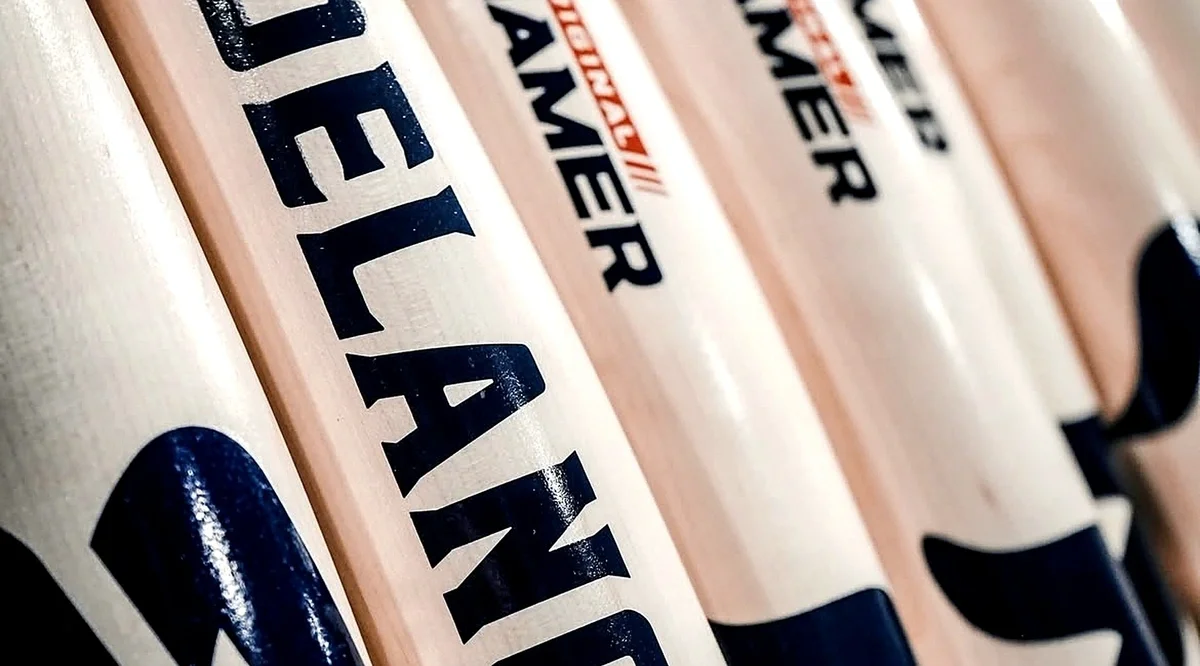
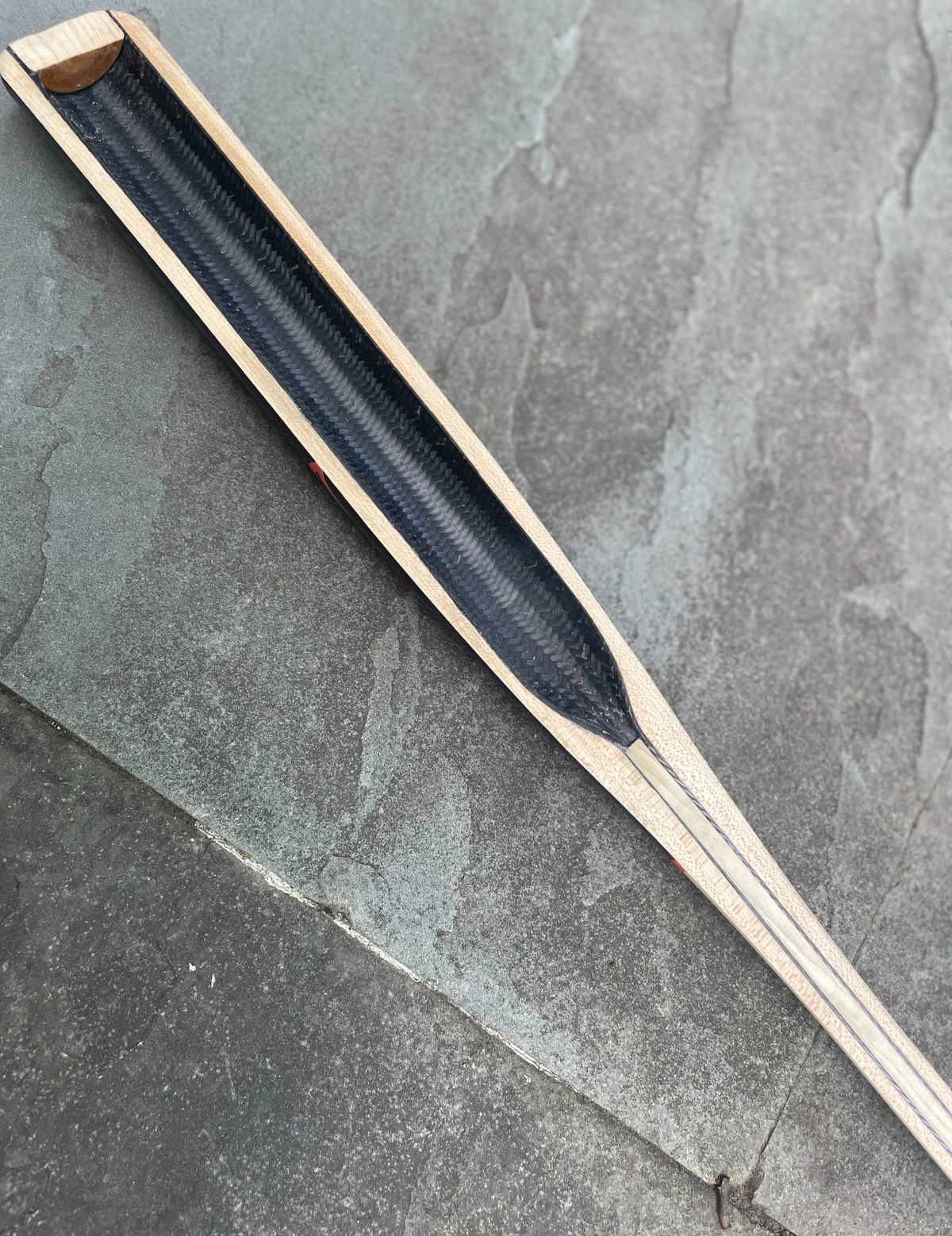
Delano Bat Company, The Original Gamer™
- *Built from a prime grade solid maple billet with an internal construction of carbon fiber composite courtesy of our patented FZN Composite Core™ design
- *Specified max barrel diameter of 2 ⅝
- *BBCOR certified
_____________________________________
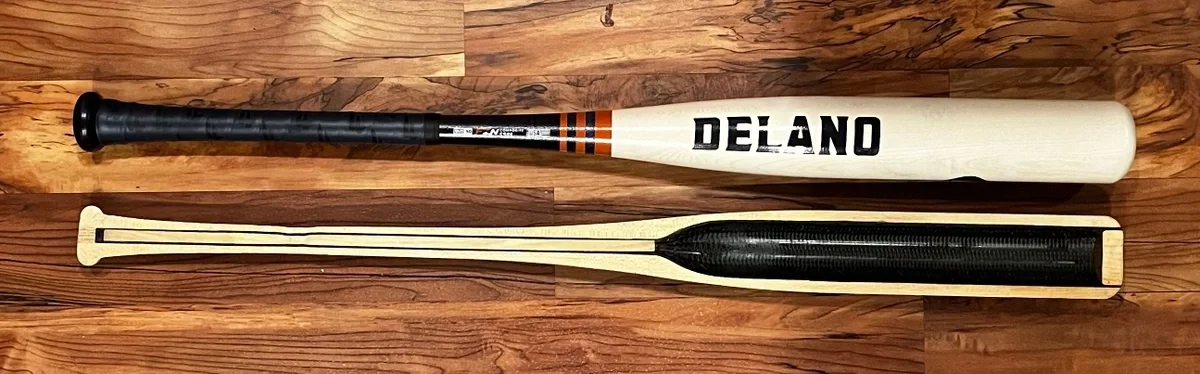
Louisville Slugger® RA13 Composite (Wilson Sporting Goods)
- *Composite handle
- *Maple barrel with “internal composite tube” (described as plastic/PVC by some)
- *Specified max barrel diameter 2 ⅝
- *Identical profile as the solid wood RA13 turn model, which is considered slightly end loaded
- *BBCOR certified


Comparison profile of The Original Gamer™ vs. RA13
___________________________________
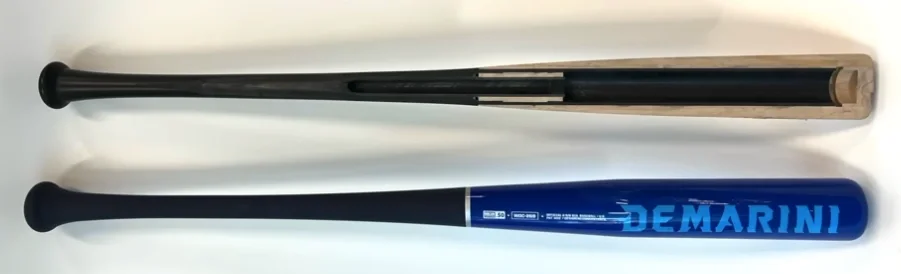
DeMarini® “The Woods” (Wilson Sporting Goods)
- *Identical construction to Louisville Slugger RA13 Composite
- *Described as a more balanced, mid-loaded vs. the RA13 Composite
- *Specified max barrel diameter 2 ⅝
- *BBCOR certified
____________________________________
Baum® Bat (Owned by Marucci)
- *Baum does not publicly provide details on the materials or construction of their bats
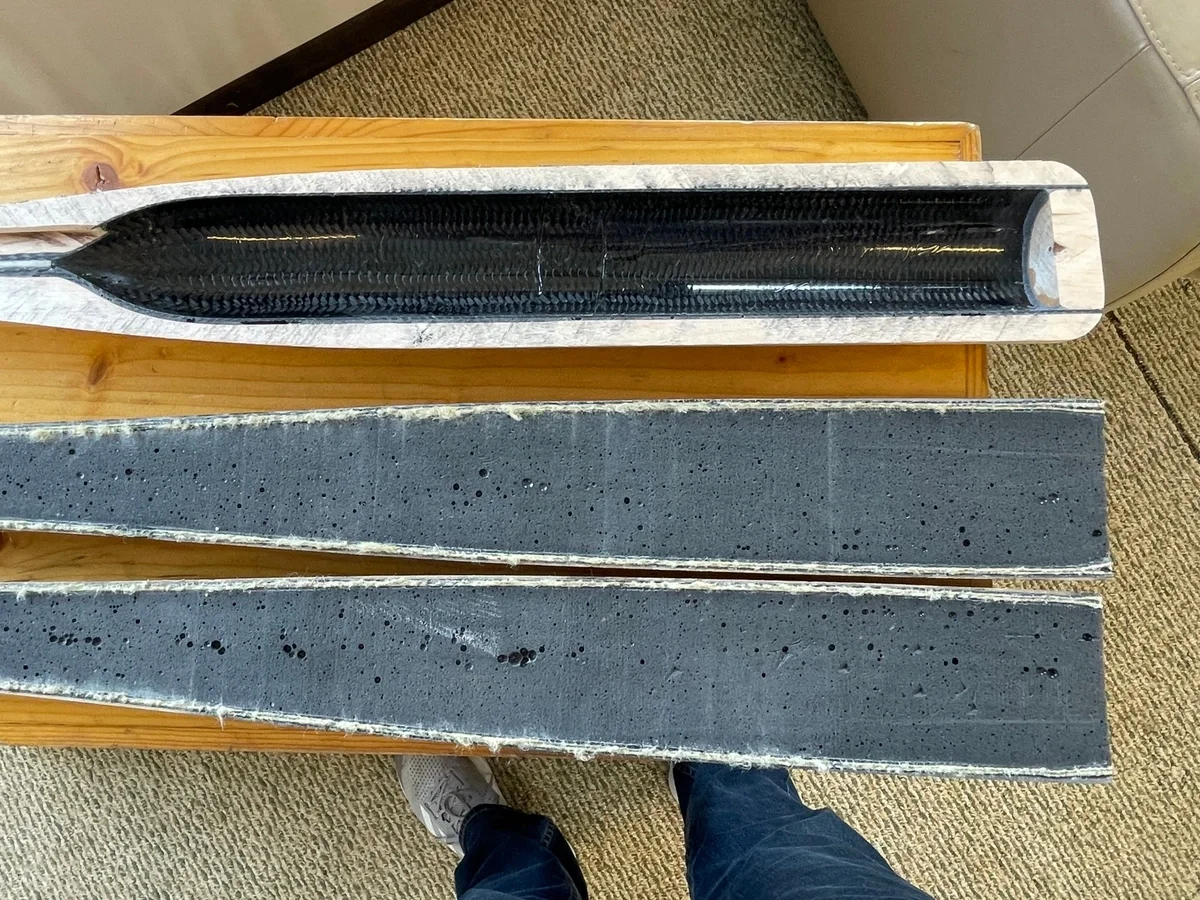
- *We are left with common opinions that describe the construction as a wood veneer, kevlar or fiberglass sleeve, filled with a hard foam-like substance
- *Specified max barrel diameter of 2.505 and a sweet spot diameter of 2.473
- *The end loaded models appear to include metal slugs
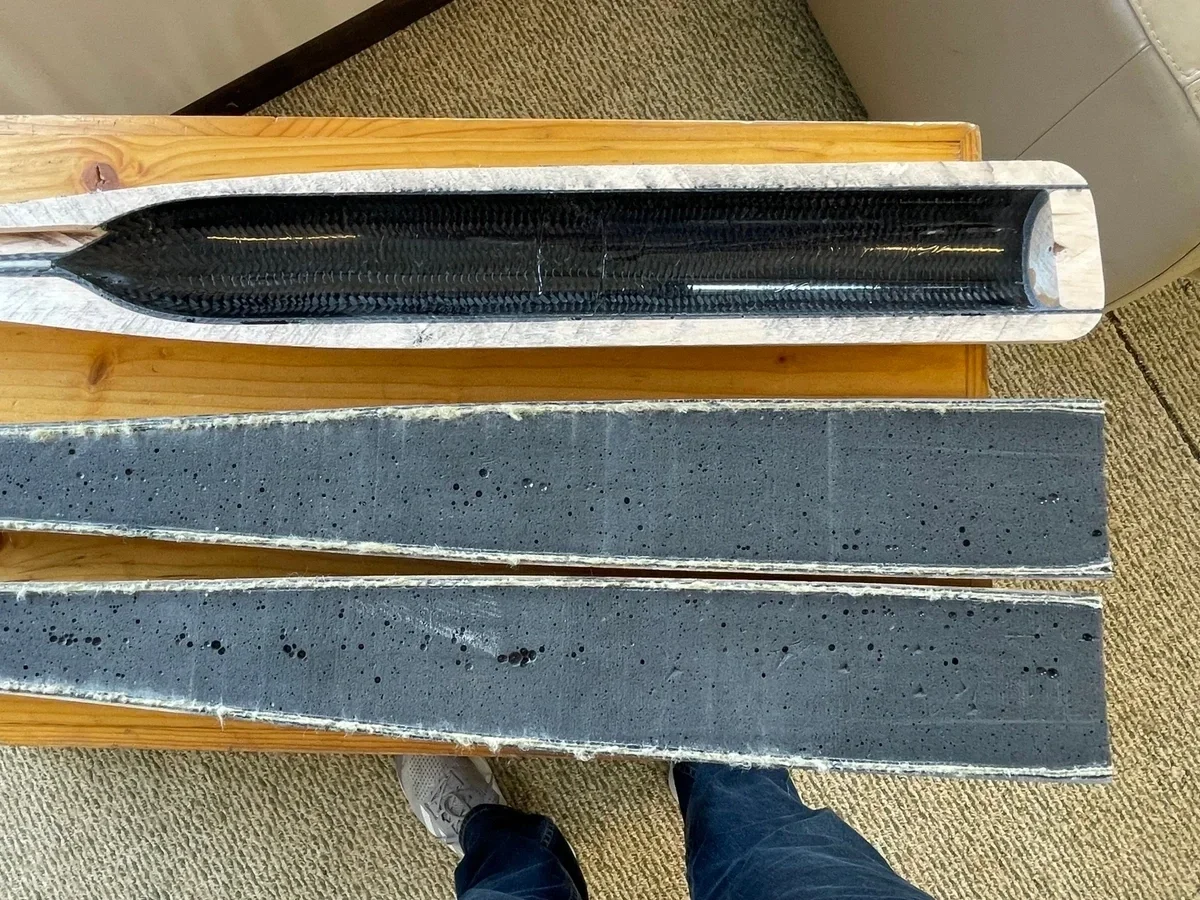
Comparison of Baum® AAA Stock (bottom) vs. The Original Gamer™(top)
End Loaded Baum® Bat (Unverified image)

Final Thoughts
As you can see, there are wide variations in the design and construction of wood composite bats, and we did not even explore the bamboo or bamboo/maple options.
At Delano, we will continue to stay focused on our goal - to make wood a relevant hitting material in today’s quest for power - providing players with the best of both worlds, tradition and performance. Why not give hitters a wood composite bat they will love to game, not just because it (probably) won’t break? Bat Digest has another good piece on wood composite bats from July, 2025 before Delano was in the market. It's worth a read for an objective source.
Lastly, the images above are what allows us to proudly and confidently claim to be the most wood bat in the wood composite category.
You can read more about FZN Composite Core™ on our website.